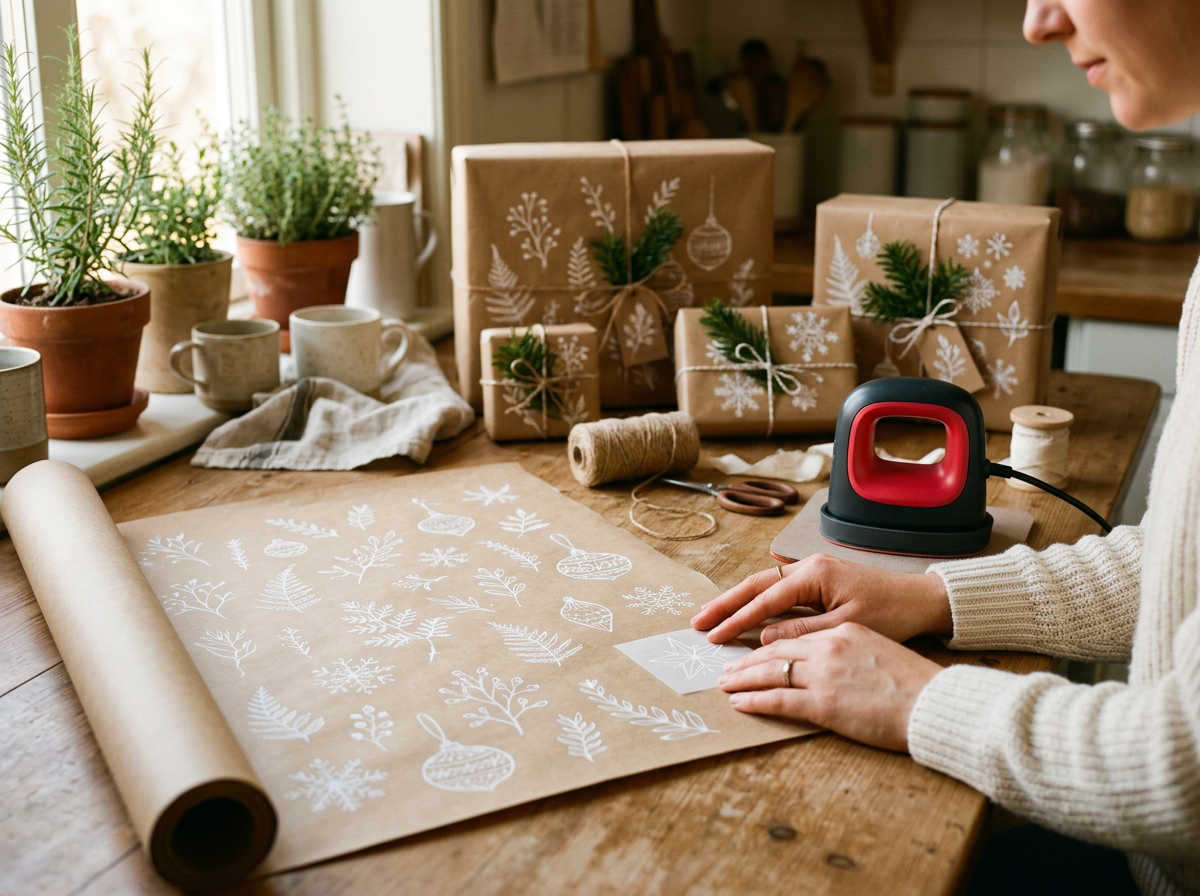
A surprising discovery inside Ninja Transfers is opening the door to an entirely new product category for apparel decorators: printing on paper using direct-to-film (DTF) transfers.
What began as an accident during a routine packaging run has quickly evolved into a potential business expansion opportunity for shops equipped with standard heat press equipment.
From Accident to Innovation
According to Ninja Transfers, the breakthrough came when a DTF transfer intended for a T-shirt was mistakenly pressed onto a shipping box. Instead of failing, the transfer adhered cleanly.
The company then conducted a series of internal tests across multiple substrates, including cardstock, kraft paper, coated paper and corrugated board. The results were consistent: DTF transfers bonded effectively at lower temperatures and pressures without scorching or warping the material.

“We weren’t looking for this,” said Victor Ilisco, director of business development at Ninja Transfers. “Somebody pressed a transfer onto a box and it looked good. So we tested every paper type we could find. White ink on black cardstock came out looking like letterpress. That’s when we realized this isn’t a novelty—it’s a product line.”
A New Revenue Stream for Decorators
For apparel decorators, the implications are immediate and practical. Shops that already produce DTF transfers for garments can now expand into paper-based products without investing in additional equipment or changing workflows.
Potential applications include:
- Custom wrapping paper
- Invitations and stationery
- Gift tags and bookmarks
- Coasters
- Branded packaging
This expanded capability allows decorators to tap into adjacent markets such as wedding stationery, event planning and small-business packaging, segments traditionally served by offset or digital print providers.
No New Equipment Required
One of the most compelling aspects of the discovery is accessibility. Because DTF transfers can be applied to paper using the same heat presses already found in most shops, decorators can test and scale this offering with minimal risk.
Lower application temperatures and pressures also help preserve the integrity of paper substrates, making the process viable for both small-batch customization and larger production runs.
Expanding the Role of DTF in Decoration
As DTF technology continues to evolve, its versatility is becoming a key differentiator. What started as a garment-decoration solution is now expanding into broader print applications, further blurring the lines between apparel and print shops.
For decorators looking to diversify revenue streams and maximize existing equipment, paper-based DTF applications represent a low-barrier, high-potential opportunity.