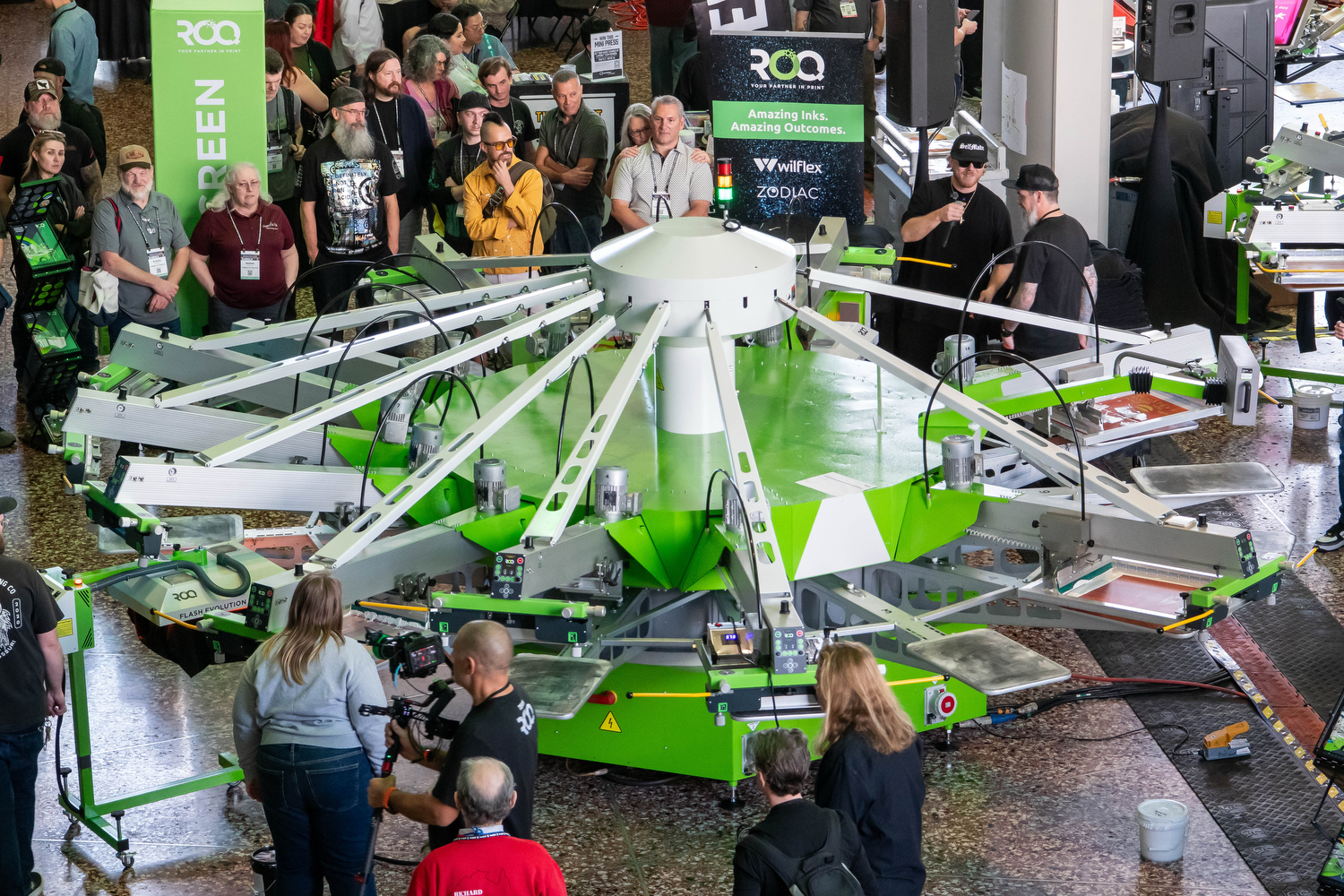
According to a recent report by the market research firm QYResearch, the global automatic apparel screen printing equipment market grew to $239 million in 2025 and is anticipated to reach $344 million by 2032, after increasing at a CAGR of 5.4 percent between now and then.
The report “Global Automatic Screen Print Equipment for Apparel Market Research Report 2026,” goes on to highlight M&R, ROQ International and MHM screenprinting GmbH as the top three companies in global automatic apparel screen printing equipment market today, accounting for about 60 percent of total market share. Other firms singled out as industry leaders include Anatol Equipment, TAS International, Workhorse Products, Lawson Screen & Digital, Brown Manufacturing Group and Hoystar Printing Machinery.
Fast Fashion, Cost Efficiency Helping Fuel Screen-printing Equipment Market Growth
In terms of product types, the report finds machines with eight to 40 stations represent the most popular configuration, holding a dominant market share of 51.4 percent. In a news release outlining the report’s findings, QYResearch described a number of key drivers/competitive advantages contributing to the growing use of automated screen-printing systems. Among these are:
- Fast Fashion and Customization: Soaring consumer demand for personalized designs and rapid product launches forces manufacturers to adopt agile, automated solutions.
- Productivity and Cost Efficiency: To counter rising labor costs and boost throughput, apparel manufacturers increasingly favor automation for its speed and consistency.
- Superior Print Quality Standards: The market’s growing appetite for high-resolution, multi-color, and detailed artwork directly fuels demand for advanced screen printing accuracy.
- Expansion of Manufacturing Hubs: The sustained growth of textile production bases, particularly across Asia, creates a continuous need for modern printing capacity.
Challenges facing Automatic Apparel Screen Printing Equipment Manufacturers
At the same time the QYResearch release outlined a number of market restraints as well. Among these are:

- High Initial Capital Barrier: The significant upfront cost of automated equipment presents a challenge for small and medium-sized enterprises.
- Operational Complexity: These systems require skilled operators and regular specialized maintenance, adding ongoing operational costs.
- Rising Substitute Technologies: Digital printing, heat transfer, and sublimation methods are strong, growing alternatives, especially for certain applications.
- Small-Batch Inflexibility: Optimized for large-scale production, automatic screen printing is less efficient and economical for short-run, quick-turnaround orders.
- Regulatory Pressure: Increasingly strict environmental regulations on conventional inks and cleaning solvents necessitate investment in eco-friendly upgrades.
- Industry Cyclicality: Investment decisions in printing equipment are directly susceptible to the volatile, cyclical nature of the apparel industry.
For a complete copy of the report, click here.