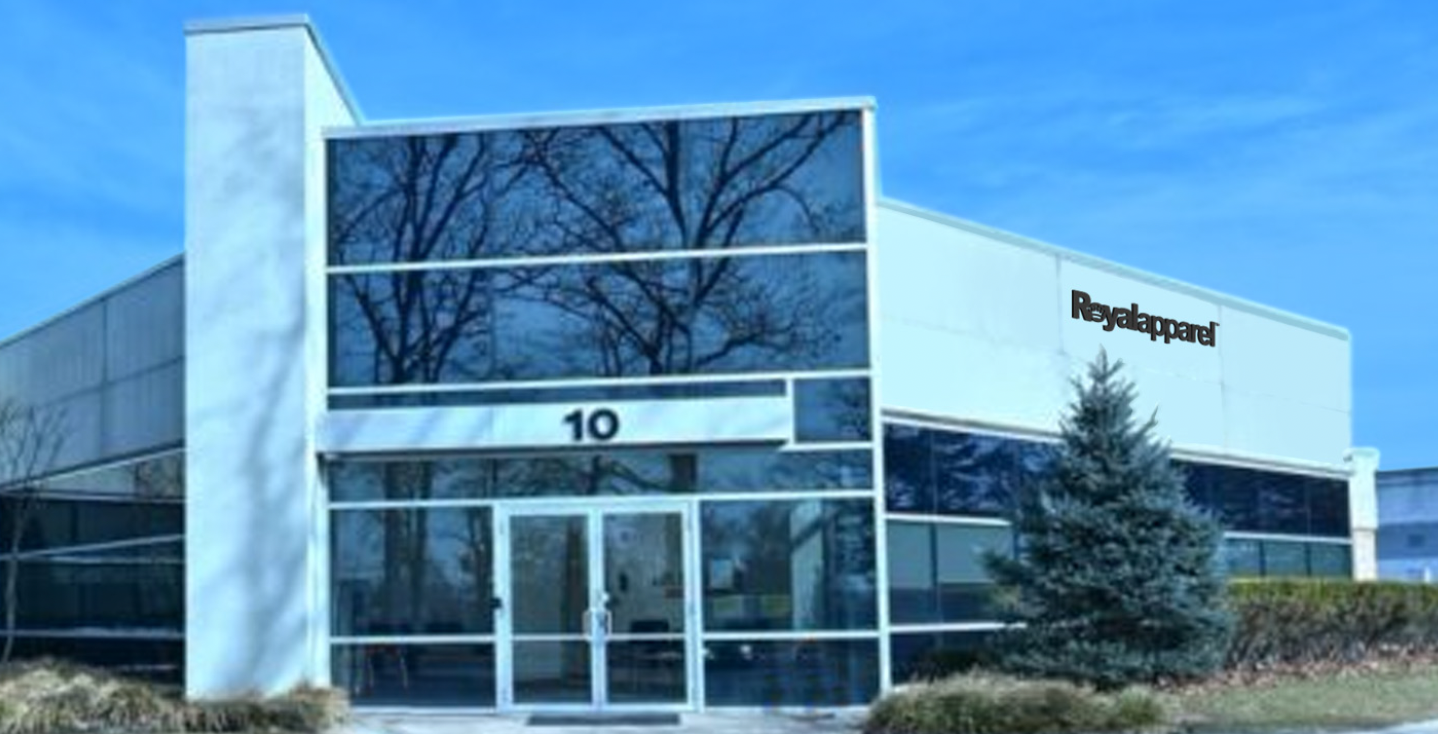
NEW YORK — Royal Apparel has expanded its U.S. manufacturing operations with the acquisition of a second facility in Hauppauge, New York, located at 10 Commerce Drive. The addition brings Royal Apparel’s Long Island presence to two buildings, alongside its headquarters at 91 Cabot Court, and follows the company’s recent announcement of a new West Coast distribution center.
The new facility strengthens Royal Apparel’s position as one of the leading Made-in-USA apparel manufacturers, increasing capacity across its fully vertically integrated operation. From design, fabric sourcing, and knitting through dyeing, cutting, sewing, finishing, and quality control, all production remains under U.S. operations—supporting consistent quality, private-label development, and fast turnaround times.
Sustainable Blank Apparel Styles
Royal Apparel is widely recognized for offering one of the industry’s largest selections of sustainable apparel styles made in the United States, while maintaining deep inventory levels with millions of garments available for immediate shipment. Fabric offerings include organic cotton, viscose bamboo, hemp, recycled polyester, modal, performance blends, and ring-spun combed yarns.
The company serves a broad and diverse customer base, including Fortune 500 corporations, major unions, national political campaigns, music tour merchandise companies, veteran and patriotic communities, leading lifestyle and retail brands, as well as thousands of screen printers and promotional product distributors nationwide.

“Manufacturing in the United States has always been a personal passion of mine, and ‘Made in USA’ is at the core of everything we do,” said Morey Mavjer, founder of Royal Apparel. “This new facility allows us to continue investing in American jobs and innovation while expanding our capacity to deliver premium quality, fast turnaround, and sustainable options to our customers nationwide.”
By combining fast-fashion speed with true U.S. manufacturing, sustainable material options, and flexible private-label capabilities, Royal Apparel continues to redefine what Made in USA means in today’s apparel industry.