In the garment decoration industry, team uniforms are one of the most common products created. However, while uniforms are often the starting point with new clients, they don’t have to be the end of the conversation. Today’s teams, clubs and organizations want more than jerseys or uniforms. They want identity. They want cohesion. Most importantly, they want options. That’s where design collections come in.
By building a coordinated collection of non-uniform items based on a team’s primary logo or mascot, decorators can transform a simple uniform order into a comprehensive brand “package.” They can then use that package as a powerful tool to help land accounts before a single garment is printed.
Turn Team Logos Into Full Apparel Collections to Boost Sales
Pretty much every team out there already has the foundation for a collection: a logo, a mascot and team or school colors. Some teams may even have multiple logos using their school name or initials and various mascot images providing yet more design opportunities. The idea here is that instead of treating these elements as “uniform-only,” decorators can extend them into a full lineup of branded gear not just for team members themselves but other students, family and fans.
Hoodies and crewnecks, sweatpants and joggers, duffel bags, equipment bags and backpacks: these are just some of the soft-goods product possibilities. Throw in a range of hard-good options, like mugs, water bottles, tumblers, koozies, you name it, and you create the opportunity for yet more sales.

There are, of course, many areas where you can apply this concept. These include team sports, such as soccer, baseball, softball, basketball and football, as well as individual sports, like figure skating and wrestling. And don’t forget the organizations supporting these athletes and their sports, like the school band, cheerleading, dance and flag teams.
And it’s not just sports. Any school club or organization can benefit from a team branded collection. Drama clubs, choral clubs, booster clubs, student government, staff: these are just a few of the other groups out there you can and should try to reach out to. The goal is to show the customer their logo doesn’t just belong on a jersey—it belongs anywhere and everywhere they can think of.
How to Expand Team Logos Into Multiple Apparel Design Options
A successful collection doesn’t require dozens of new layouts. In fact, it works best when everything is centered around a couple of main logos or designs. Start with the school’s name, text logo and mascot. After that, you can create a variety of looks and placement options, using full-color logo treatments and designs for premium garments, like jackets and polos.
For more casual pieces, create a one-color version of these same logos. Distressing the logo can also work well if you want to create a more traditional feel appealing to a broader clientele. Use a variety of sizes, like small tags of the mascot for a sleeve print near the cuff or a small center yoke on the back with a full-front type layout placed across the chest. By adding multiple print locations, you can upcharge, making even the most basic garment a more premium piece.
Note: in addition to helping streamline production, minimizing the number of logos used will make your collection feel that much more intentional, more professional. When too many logos are used, the idea of a cohesive collection falls apart and the collection as a whole stands in danger of losing its appeal. Of course, from a decorator’s perspective, limiting the number of logos and layouts you use, means there will be fewer design approvals to wait for, faster turnaround because there is less to set up for production, as well as easier upsells.
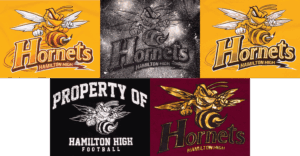
Differing treatments of a single image can increase the appeal of a collection to a wider range of customers. Images courtesy of Dane Clement
As for when it makes sense to put these strategies in gear, why wait for the customer to come to you? Mockups have always been a great way to present an idea to a customer without spending a lot of time and money producing actual product. Especially now, with the help of AI-generated mockups, presenting a team collection to a customer is easier than ever. Whether you have a long-time customer who has always come to you to get their team jerseys printed, or you’re looking to bring in some newer customers, a spontaneous collection and presentation is a great way to drum up more business and more revenue.
Start by selecting the logos or layouts that you want to incorporate into the collection. Consider the garments and hard goods you want to present and how best to place your layouts on them. Consider different color options, sizes and placements. Again, you want to create a cohesive look, so that everything looks like it belongs. Cohesion can be created through the use of a single design element or a combination of a number of different strategies. These can include the use of a color, or colors in both the logo and/or a series of different items; a single logo you produce employing a variety of different decorating methods; or the common placement of a particular logo or pattern on a variety of items.
Once you’ve finalized your designs, and selected and gathered up some photos of your products, you can use any one of a number of different image editing programs now available, like Affinity or Photoshop, to create a set of lifelike mockups. You can also use an AI app, like Nano Banana, to place the images making up your collection on the necessary product photos. To do so, simply provide a prompt in the AI app telling it where and approximately how you want the logo image placed on the image of the garment and let it do the work for you.
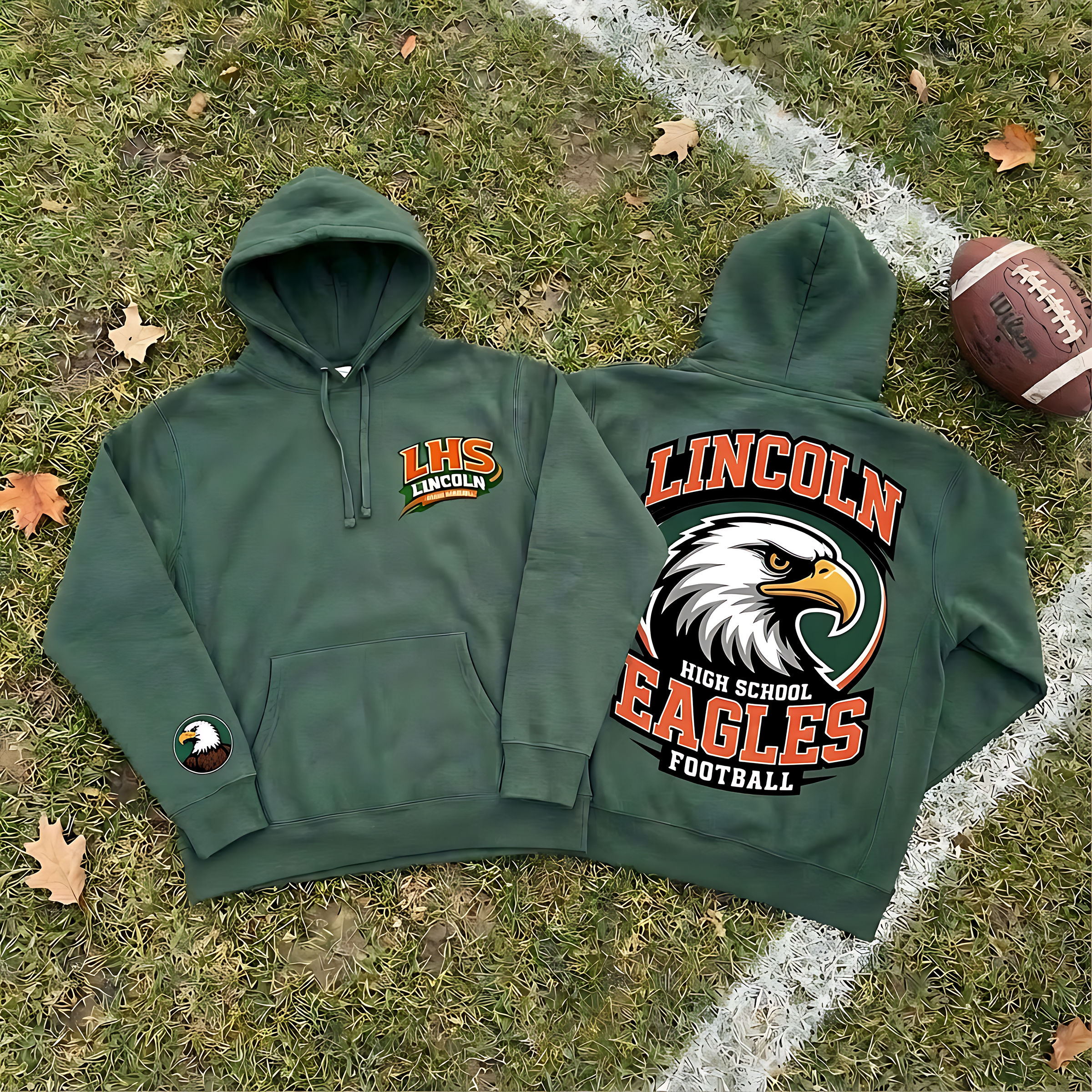
Note: while AI can be a great tool for creating mockups, it isn’t always perfect. In other words, you’re going to want to be sure and take a close look at the results. In the image shown at the top of this page, for example, AI was asked to place each logo individually in the spots indicated, and it did a really nice job; however, there were a few things that could make it better.
Taking the image into Photoshop, the whites, for example, were tweaked in order to make them look more natural, as opposed to just going with flat white. Shadows were also added, so the image would look like it was following the wrinkles of the sweatshirt. Finally, the size and placement of the small sleeve logo were adjusted.
Granted, this might mean having to put in a little more work. However, taking the time to make your mockups look the best they can drives home your commitment to your customer. It shows your willingness to go above and beyond, two things that will go a long way to helping you beat the competition, whatever kind of decorating you specialize in.
How to Present Apparel Collections Using Mockups and Visuals
Once you’ve got your mockups completed, you’re ready to present the collection to the customer. The important thing here is to remember you’re no longer just selling a jersey or a hoodie—you’re selling a collection. And again, you don’t have to print a single item to do it. No need to spend a whole lot of time and money buying product, printing out transfers or exposing screens and setting up the press. Bottom line: quality mockups are a great way to showcase your vision and help customers visualize bigger and better options with minimal risk.
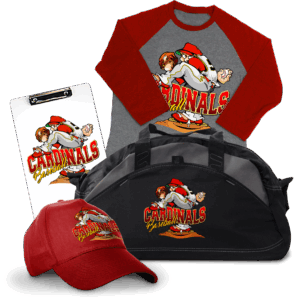
Why stop at just a hat and jersey? Creating collections not only increases sales in the short term, it will help create a stronger relationship with your customers. Image courtesy of Dane Clement
To create your presentation, prepare a slideshow using an application like PowerPoint. You can also print out your mockups on some nice heavy paper stock and then turn that into a kind of booklet or brochure. Start with a title page highlighting the name of the collection, such as “Marshall High School Football 2026 Apparel Collection.” Follow up with a series of slides or pages showing the different items you’ve created for the collection, including some images of the logos and layouts by themselves. Provide details on the decoration method, or methods used with each item, the item’s name any other relevant details. End the presentation with a set of clear, concise ordering instructions.
When customers can see the full potential of their brand, decision-making becomes that much easier; order sizes will grow as a natural consequence. Presentations like these also serve to position you as not just another one-and-done printer taking individual orders, but a creative problem-solver. Going the extra mile, taking the time to build and present a brand collection will set you apart from the competition. Professional mockups elevate both your individual offerings and your status as a decorator. The better thought out your presentation, the more you and your products will be valued, providing you an opportunity to maximize the number of sales you’re able to make with both existing and future customers.
That said, while having multiple items in your collection creates the potential for bigger sales, you don’t want to oversaturate things with an overwhelming number of items simply for the sake of creating the maximum number of choices possible. Better to make sure everything in your collection is a quality item your customers are going to want to buy. Offering a select number of quality garments and hard goods will add to your collection’s perceived value. The greater the perceived value, the more the customer will want to do business with you.
Again, presenting a collection like this not only introduces your customers to some fresh ideas, it shows them your willingness to go above and beyond. This in turn can’t help but build the kinds of relationships that will encourage teams to return for reorders, year after year. It can also result in an expansion into other groups, teams or clubs, as word spreads and they see the collection you created. For an organization comparing multiple decorators, the decorator who shows a complete, ready-to-go vision will often get the job, even if their pricing isn’t the lowest—a win for a quality decorator if ever there was one.
Use Print-on-Demand and Outsourcing to Expand Product Offerings
Something else to keep in mind: when thinking about what you want to offer in a collection don’t limit yourself to only those items you produce in house. With the print-on-demand (POD) services now available through companies and services like STAHLS’ Fulfill Engine (stahls.com/fulfill-engine), you can provide your customers with more decoration options than ever. There are also, undoubtedly, any number of other decorators in your area who would be more than happy to take on, say, the responsibility of doing your embroidery work for you.
Although your customers may only know you as a screen printer or embroiderer, leveraging the power of outsourcing and POD allows you to expand your offerings and create a collection with completely new products and methods. Set up an online store in which anything you can’t print in-house can be easily ordered online and then drop shipped to the customer. Not only will this save you time, it will open the door to a world of possibilities.
In today’s garment decoration market, creativity is key to increasing sales. By turning a basic team logo into a full apparel and accessories collection, you’re giving customers something they didn’t even know to ask for. You’re not just selling apparel. You’re selling identity, pride and possibility—exactly the kind of thing that’s going to land those accounts you’ve been chasing.
Dane Clement (daneclement.com), is VP Executive Creative Director for GroupeSTAHL. He has been speaking and writing for the decorated-apparel industry since 1995. He has also authored several artwork-training books for various garment-decoration methods.