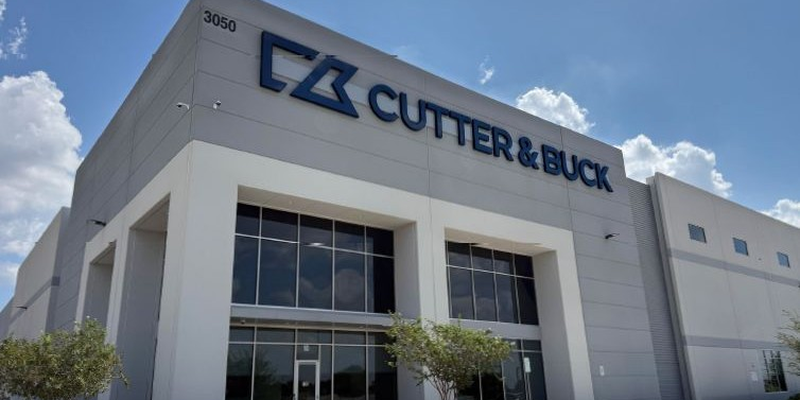
How Cutter & Buck rebuilt its decoration operations around real-time production management and turned a legacy-system liability into a growth engine.
Cutter & Buck is a premium lifestyle sportswear brand that has grown into the premier multi-brand apparel partner for corporate, retail, and team customers. Dynamic and changing sales channels saw its operations team start navigating a quiet transformation. Founded in 1989 with deep roots in golf, Cutter & Buck today operates across four channels. Corporate Apparel, Golf, Retail, and a fast-growing Licensed Apparel segment covering NFL, MLB, and college sports – sold one unit at a time direct to consumer. The company runs a national network of decoration and distribution facilities in Seattle, Dallas, and Kentucky (via 3PL), plus a Canadian operation in Brampton, Ontario.
Behind the brand’s composed surface, however, the operation was straining.
The Order Profile Changed. The System Didn’t.
The pressure wasn’t caused by declining business – it was caused by growth in exactly the wrong direction for legacy systems. Cutter & Buck’s historical average order size of 40 pieces had plummeted to 7–11 pieces down to as low as two pieces during peak season. At the same time, the licensed apparel business became the fastest-growing part of the company, powered by a new capability to produce and ship a single, on-demand decorated unit to a consumer in just over 24 hours.

“Blanks are easy to grow. Decoration is hard,” says Scot Sumpter, Executive Director, Distribution, Enhancement & Logistics. “Every order is smaller, every order is personalized, and every one still has to arrive on time.”
High-volume, small-quantity decoration is the hardest profile in the industry to schedule. On the legacy system, creating a single schedule run for 2,500 to 3,000 orders; many of them one-piece jobs took over an hour, and had to be repeated multiple times a day. The system was unstable, prone to crashing or freezing and the operations team spent peak seasons firefighting to protect the one thing that could never slip: the customer’s promised ship date.
Diane Spaur, Process and Project Manager at Cutter & Buck, is quick to make an important distinction. The customer was never the victim of the chaos – the company was. “Externally, customers didn’t see much change,” she says. “We always met the ship dates but internally, the strain was immense.” She pauses. “That doesn’t scale, with more sites and more growth, we needed a system with real legs under it.”
Diane’s framing matters. A key objective for the Dallas site was to improve service to over 40% of its customer base. This was never an IT problem; it was a strategic one. The legacy system was preventing the company from scaling, expanding to multiple locations, and adopting new decoration technologies. With a major ERP and WMS upgrade on the roadmap, the leadership team had no confidence the incumbent vendor could deliver the necessary interfaces on time.
A Ninety-Day Commitment
The introduction to Tracker came through Barudan, Cutter & Buck’s embroidery machine supplier in Seattle. Sumpter and his team were impressed with Tracker’s depth of industry knowledge but there was one critical scheduling capability the platform didn’t yet offer, something the legacy system had taken years to develop.
Will Hemming, Tracker’s founder and Technical Director, gave a commitment that became the defining moment of the relationship: “Give me ninety days, and we’ll make it do that.”
The Tracker team delivered. On time, with regular updates along the way. For a team conditioned by years of missed deadlines from other vendors, the contrast was stark. Spaur’s assessment is blunt: “Tracker hit their deadlines every time.”
Sumpter was, by his own account, frustrated for the opposite reason most executives are: “Honestly, my biggest frustration was that we couldn’t deploy Tracker sooner. We were in the middle of an ERP implementation, a new WMS rollout, and the launch of our Dallas facility. Those projects created a challenging sixteen-month period where the business had to sequence priorities carefully.
Looking back, I would have loved to have had Tracker in place earlier.”
The Real Test: Launching Dallas
What followed was one of the more complex parallel implementations in the decoration industry. In July, Tracker went live in the company’s Renton, Washington facility, integrated with the existing legacy WMS. Simultaneously, the Tracker team worked to integrate with an entirely new WMS for the brand-new Dallas distribution and fulfillment center. Two different WMS systems, in two different locations, at the same time.
Sumpter is unequivocal about the outcome: “Tracker provided critical functionality required to support the success of the Dallas launch”.
The custom scheduling capability built in those ninety days became the most strategic piece of the system, purpose-built for a high-volume, small-order environment.
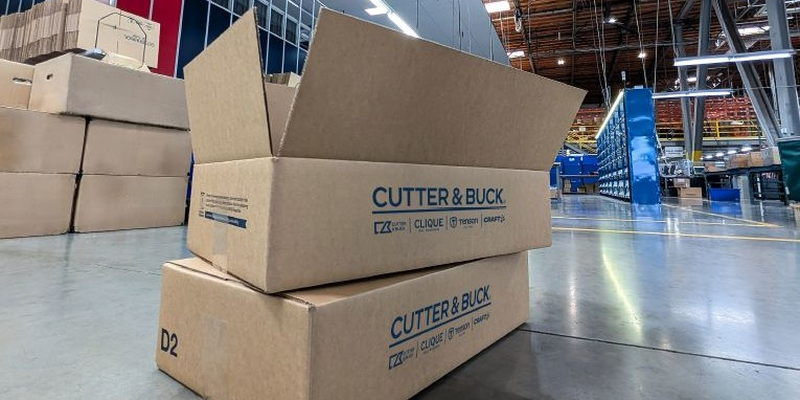
The Results: Simplicity, Measured
The headline number is dramatic. A scheduling run that took over an hour on the legacy system now takes five minutes. “We went from an hour-plus to schedule one run to five minutes,” Diane confirms. “The impact of just that is indicative of how well it works.”
But the deeper outcomes are the ones Sumpter calls “the real return”:
- Newfound confidence to scale. For the first time, the company believes it can grow in ways the legacy system simply wouldn’t allow.
- Radically reduced training time. Intuitive machine screens meant inexperienced new staff could learn embroidery fast enough to staff the Dallas launch; while 20-25-year veterans, initially skeptical, adopted the system immediately.
- “Change management took no time at all,” Spaur says. “They saw straight away that it would make their jobs easier.”
- Less stress, more structure. Operations that once depended on heroic effort now run streamlined and structured.
Even the process itself improved: Tracker’s team challenged Cutter & Buck to rethink its workflow, prompting a complete revision of how the Dallas facility operates. This helped us significantly improve our production floor tools and dashboards. Even elements as simple as better device linked monitors to manage the production floor were a simple but very effective change.
Scott’s Advice to the Industry
Sumpter spent years actively searching for a replacement before finding Tracker. “Based on our experience, I would expect organizations with more than 100 heads, a complex business model and/or small order sizes are likely to see significant benefits.”
And his final endorsement may be the most honest one a vendor can receive: “I’m very conflicted. I adore Tracker and how the team operates; I’d love to keep it our little secret.”
Cutter & Buck is a premium apparel brand headquartered in Seattle, Washington, founded in 1989. For more information on Tracker’s real-time production management system, visit trackmybusiness.com.