- New direct-to-film (DTF) powder improves stability in polyester apparel printing applications
- Facilitates custom apparel decoration of performance apparel, including swimsuits, teamwear
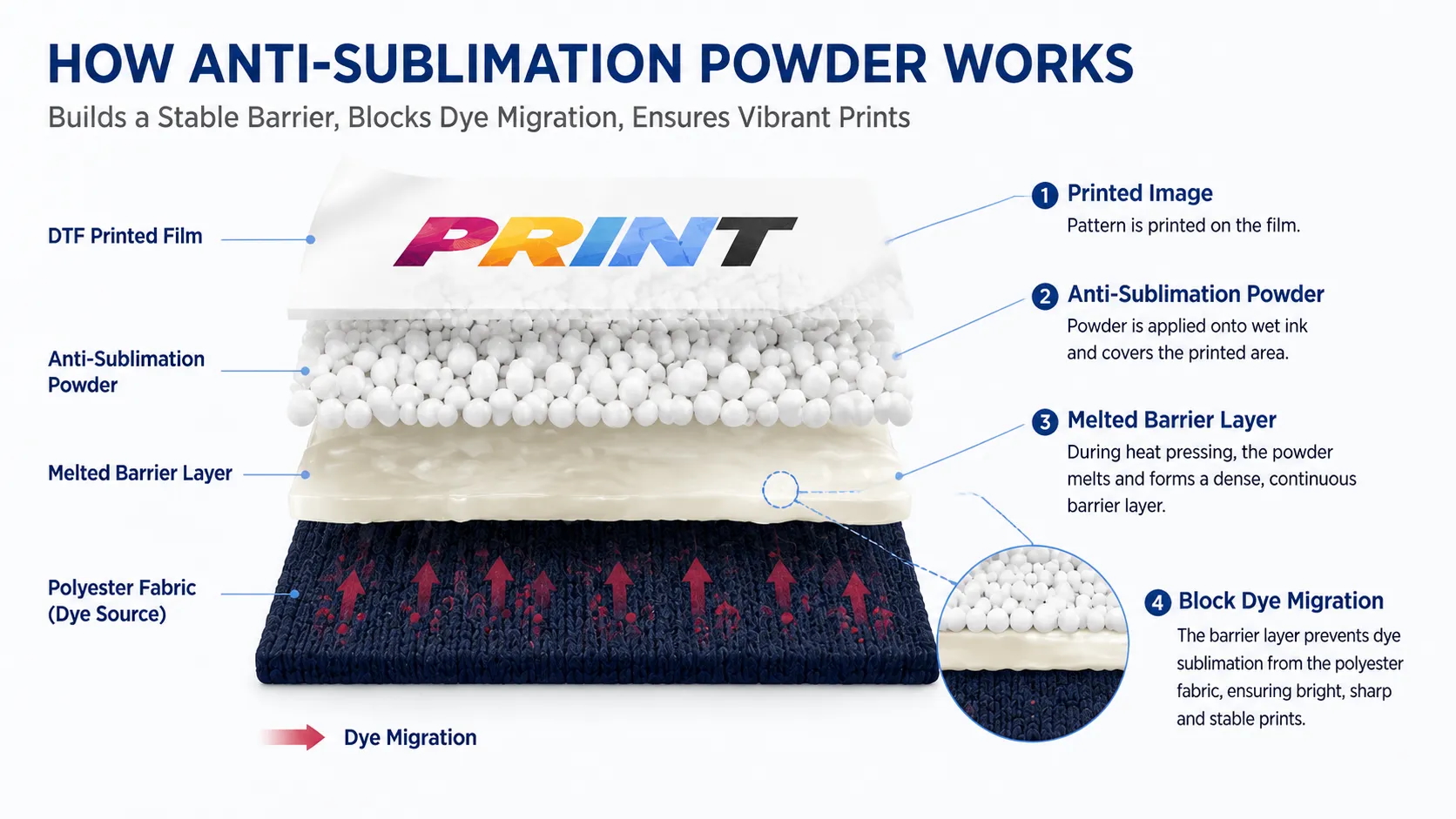
To support custom decorated apparel professionals overcome dye migration challenges, Hanrun Paper has developed a specialized direct-to-film (DTF) anti-sublimation powder for polyester and other sublimation-prone fabrics. With its advanced formulation and mechanism, it effectively minimizes print inconsistencies caused by dye migration, delivering improved stability and consistent output quality.
Key Benefits to Hanrun’s new DTF powder include:
- Cleaner, more vibrant color reproduction
- Sharper edges with improved fine-detail retention
- Consistent DTF transfer performance across production runs
- Reliable results for high-volume custom-apparel decorators
- Higher production yield with reduced rework rates
By minimizing the risk of dye migration, printers can significantly enhance overall print quality, improve operational efficiency, and deliver more consistent, reliable finished products to their customers.
Looking Ahead: The Future of Direct-to-Film (DTF) and Performance Fabrics
As polyester and blended fabrics continue to dominate the sportswear, performance apparel, and custom textile markets, controlling dye migration has become increasingly critical. However, for printers working with polyester garments, maintaining consistent transfer quality can be challenging. One of the most common issues is dye migration—a problem that can affect color accuracy, image sharpness, and overall product appearance.

Dye migration primarily occurs in polyester fabrics and garments dyed using sublimation processes. Although a transfer may look perfect immediately after printing, heat press curing can trigger dye reactivation within polyester fibers. As a result, dyes may migrate into the printed layer, leading to color contamination, blurred edges, reduced image clarity, and unwanted color shifts such as white or light graphics turning pink.
The effect of dye migration is typically more pronounced on darker-colored fabrics, where color contrast makes contamination more visible. For manufacturers producing sportswear, team uniforms, workwear, and performance apparel, dye migration remains one of the most persistent challenges in achieving consistent, high-quality heat transfer results.
With its DTF anti-sublimation white powder, the company enables industrial users to achieve high-quality, low-defect printing even across complex fabric types and demanding production environments, while improving overall workflow efficiency and optimizing production costs. For more information on the new DTF powder and the company’s complete line of products, go to hanrunpaper.com.