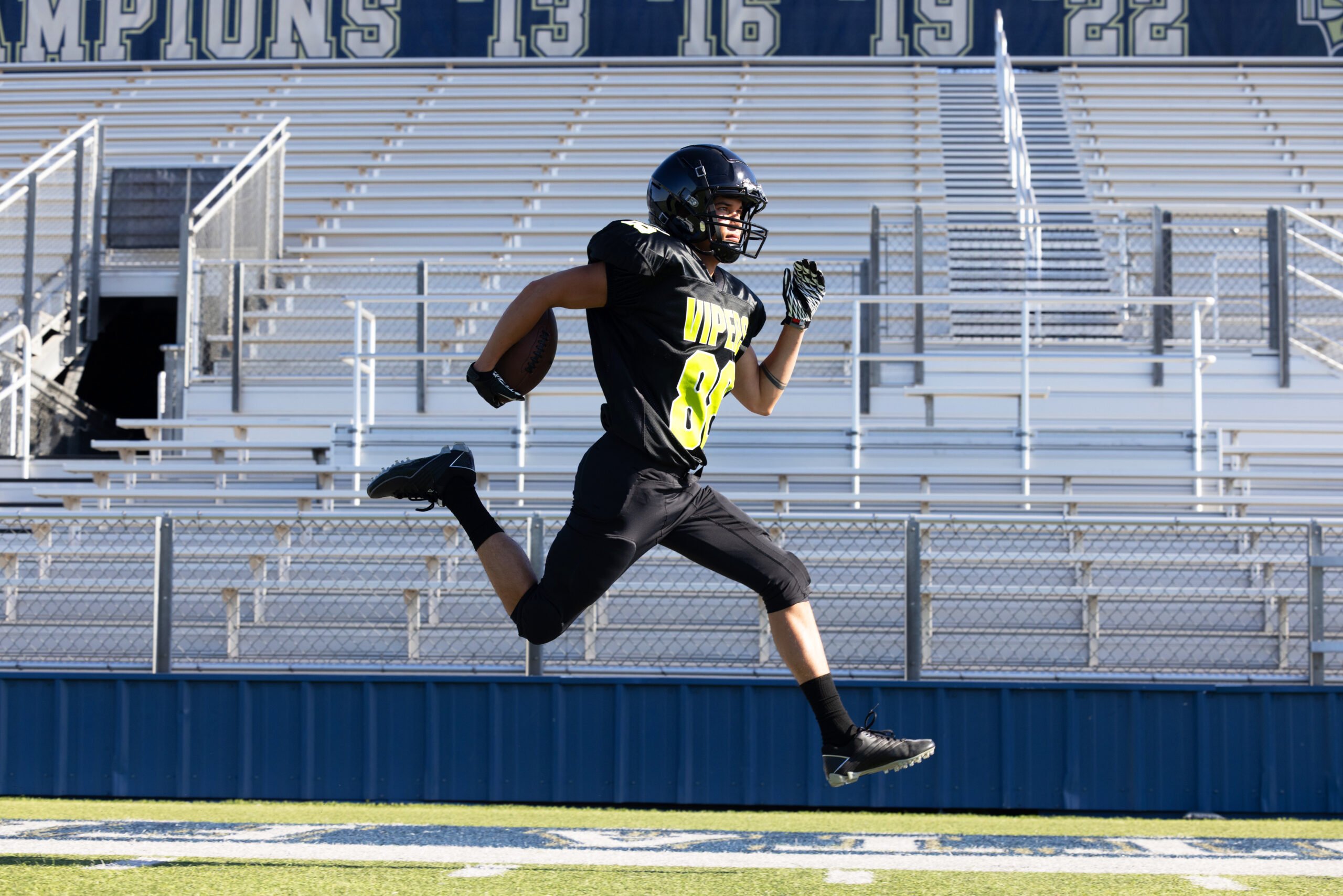
As we move through 2026, growth in teamwear and athleticwear categories is multi-pronged. While grassroots sports organizations, youth and club leagues and branded team apparel are strong contenders, lifestyle-driven athleticwear presents a considerable growth area as well.
“We’re also seeing growth in apparel that supports specific sports,” says Glen Brumer, sales director, Royal Apparel. “Examples include combat sports, lacrosse, wrestling, running, yoga, hiking and biking. Many of our customers are doing limited collection drops of their brands, which is exciting to their consumer base and creates additional demand.”
Youth Sports and Grassroots Programs Fuel Teamwear Growth
As grassroots sports, school and club teams continue to motivate the teamwear and athletic apparel markets, versatile apparel that works both on and off the field is also in high demand.
“This is especially true in youth sports programs, where lightweight performance garments provide breathable comfort and durability for practices, tournaments and team activities,” says Kendall McKenzie, marketing coordinator, Citadel Brands/AWDis.

In addition, youth and local sports teams and organizations are increasingly seeking apparel that offers not only durability and consistent performance over repeated use, but a professional appearance that reinforces team identity.
Organizations have expanded their offerings to lifestyle looks as consumer lifestyles require garments that work for both activity and everyday wear.
This overlap between performance and lifestyle has opened new opportunities.
Performance Meets Lifestyle in Modern Athletic Apparel
Many of the trends in 2026 are being driven by the usual suspects: sustainability, function and fashion. Performance basics, layering pieces, customization, recycled and responsible materials, all play a role.
The specific category determines the exact drivers, as athleticwear can be heavily rooted in lifestyle elements through fabrication, technical trims and styling.
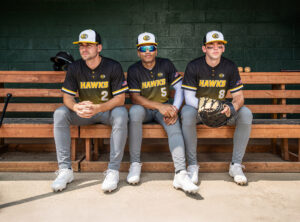
Momentec Brands baseball uniforms combine premium performance fabrics with fully customizable graphics, delivering pro-level comfort, durability and team identity on game-day. Photo courtesy of Momentec Brands
“Athletes, coaches and fans want pieces that perform well but also feel comfortable for everyday wear,” says Deanna Carter, director of marketing and communications, Momentec Brands. “This is driving growth in performance basics, elevated fleece and lightweight outerwear.”
As has been the case for a number of years now, in 2026, we can also expect continued blurring of performance and lifestyle apparel.
Athletic wear will transition easily from competition or training to a broader, everyday use.
“The categories gaining the most momentum are moisture-managing performance pieces, versatile training apparel, durable fleece and products that incorporate recycled or more sustainable material blends,” says McKenzie, Citadel Brands/AWDis. “For teamwear specifically, there is strong interest in pieces that can serve multiple purposes across training, travel and branded club apparel.”
No matter where they are coming from, consumers want garments that perform technically, while delivering a polished aesthetic in everyday settings. For instance, a hoodie or performance T-shirt might be used for training, travel and casual wear. Therefore, comfort, fit and durability are as important as traditional performance features.
“We’re seeing a shift toward premium or ‘luxe’ finishes in athleticwear,” says Grace Owen, brand manager, TriDri. “Consumers are increasingly looking for styles that combine performance with a softer, more elevated feel. Leggings, sports bras and performance T-shirts are designed to feel more refined, while delivering key benefits, such as stretch, breathability and durability. Relaxed silhouettes and gender-neutral fits are gaining popularity, since they appeal to a wider audience for training and everyday wear.”
Athletic Apparel Colors, Fits and Fashion Trends for 2026
Color, not surprisingly, continues to play a major role in team identity and brand recognition. Black, navy, red and royal remain classically couture, but rich neutrals, earth tones and single-color depths are emerging. When it comes to teams, consistency is key, as they want coordinated shades across T-shirts, fleece and training pieces to build a cohesive program.
In addition to classic black, TriDri is seeing white and heather grey as consistent, top-selling colors. “These colors reflect the ongoing demand for versatile, neutral palettes,” Owen says. “Alongside these core shades, we’re seeing increased interest in our ‘nude’ shade, which has proven particularly popular.”
In terms of silhouettes there appears to be a shift toward modern, relaxed, athletic fits. Think oversized, slightly boxy fleece, lightweight layering pieces, performance hoodies, and matching tops and bottoms. At the same time, Owen says TriDri is also seeing a renewed interest in slim, feminine silhouettes, particularly in performance T-shirts, in a way that combines a flattering fit with the comfort and performance expected from athleticwear.
Performance Fabric Technology Continues to Evolve
Strides in technology and innovation across the teamwear and athleticwear categories continue to deliver high-performance features. Among the most requested features are breathability, stretch and mobility, moisture management, and durability for repeated washing, says Royal Apparel’s Brumer.
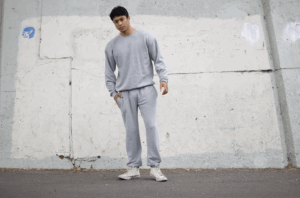
This Royal Apparel unisex fleece set combines a classic crewneck sweatshirt with matching joggers, offering a clean, retail-ready silhouette and ultra-soft feel. Photo courtesy of Royal Apparel
“We’ve also noticed that comfort and feel are becoming equally important,” he says. “Teams want performance, but they also want garments that athletes enjoy wearing, both on and off the field.”
Performance features are particularly important in training apparel. While breathability, stretch and moisture management may now be considered baseline expectations, other features, such as odor control, UV protection and cooling technologies, are becoming more common as well. This is especially true for outdoor sports and warm-weather training environments.
“Elements of the fabric, such as wicking ability, UV protection and stretch, are essential,” says Adam Waugh, vice president of marketing, A4 Sports Apparel. “The real difference is how well a garment performs across all areas. It’s not enough to do one thing well.”
Smart textiles and wearable technology are also still emerging in teamwear, McKenzie says. “While they’re gaining traction in professional and elite training environments, most grassroots and school programs prioritize durability, affordability and customization over advanced integrated technology. However, we expect these innovations to continue evolving as technology becomes more accessible.”
Sustainable Athletic Apparel and Recycled Materials Gain Momentum
As always these days, the importance of sustainability in manufacturing strategy cannot be overstated. Ask any manufacturer, and you will hear that sustainability is a core focus and ongoing strategy.
Royal Apparel, for example, has long been committed to producing apparel domestically and offering environmentally responsible fabric options, says Brumer. “We offer one of the widest portfolios of eco-friendly styles,” he says. “Because we manufacture in the United States, we can maintain higher standards for labor practices, environmental regulations and quality control.”
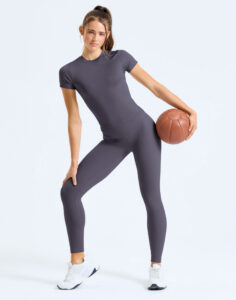
TriDri’s Luxe collection is made from recycled nylon blends delivering stretch and comfort for performance-driven athleisure programs.
Photo courtesy of TriDri
Similarly, McKenzie says Citadel Brands/AWDis has implemented initiatives to reduce environmental impact as well. These include eliminating single-use plastics in production, transitioning most garment packaging to plastic-free solutions, and reducing water consumption during dyeing and finishing. TriDri has also expanded the use of recycled polyester and nylon, helping divert waste from landfills and reduce environmental impact as compared to conventional materials.
“Balancing sustainability with cost and performance is an ongoing challenge, but we prioritize materials and certifications that support responsible production while maintaining the durability and comfort our customers expect,” Owen says. “We also ensure our pricing meets industry expectations, allowing customers to achieve strong margins. In addition, by using certified recycled materials and maintaining clear sourcing practices, we help build trust with customers while reinforcing our commitment to environmental and social responsibility.”
Across the industry, an increased investment in automation and more efficient manufacturing technologies is being embraced as well. Automated cutting, precision fabrications, and process improvements are helping manufacturers improve consistency, reduce waste and operate more efficiently. This matters, not only from a production standpoint, but also from a supply chain standpoint. Better manufacturing technology supports reliability, faster decision-making, and stronger long-term scalability.
Understandably, balancing sustainability with cost expectations remains a challenge, since sustainable materials can carry higher raw material costs. However, many customers recognize the long-term value of responsibly made products, especially when they also deliver superior comfort and durability.
If a garment becomes a consumer’s favorite piece and is worn frequently, for example, the raw material cost may be higher, but the cost per wear is lower.
At the same time, companies like A4 Sports Apparel are doing their best to keep a lid on costs wherever possible. “Over the last two years, we have transitioned more than 80 percent of the garments we sell to be constructed with recycled fibers,” Waugh says.
“That’s over 100 styles, and importantly, we made that switch without charging our customers a penny more.”
Along these same lines, transparency plays an important role in Citadel Brands/AWDis’ brand positioning, since customers increasingly want to understand how and where their garments are produced, says McKenzie.
“At AWDis, we operate as a vertically integrated business. We own our own mill, which gives us direct oversight of the manufacturing process and allows us to maintain consistent standards across production,” she says.
“In addition, we work only with partners who meet strict ethical and environmental requirements across areas like human resource management, workplace safety, sustainability and legal compliance,” McKenzie says. “This level of accountability helps ensure our products are produced responsibly while giving customers confidence in the integrity and transparency of our supply chain.”
Inventory, Speed and Supply Chain Reliability Remain Critical
It’s no secret that global supply chain disruptions in recent years have highlighted the risks of overly complex sourcing networks. Many companies are therefore prioritizing reliability and shorter supply chains as they strive to shockproof their overall production processes.
With this in mind domestic manufacturing offers advantages in terms of both consistency and responsiveness, which in turn is causing the industry to seek out as many suppliers as it can closer to home. When time is critical, domestic manufacturing allows teams to respond faster to schedule changes or last-minute needs as well, especially critical concern when it comes to the athleticwear market.
“One of the biggest challenges in teamwear is timing,” says McKenzie. “Orders often need to align with tryouts, season launches or school calendars. The best way to manage seasonal cycles is to combine strong forecasting with dependable stock availability and clearly communicate across the supply chain. Programs work best when core styles and key colors are consistently available.”
Fast Customization, DTF and Sublimation Expand Teamwear Opportunities
Further complicating the situation as far as manufacturers are concerned is the fact customization remains an especially major driver with teamwear. Teams often need custom options quickly for tournaments, spirit events or roster additions. Dealers therefore tend to rely on products that enable fast turnaround.
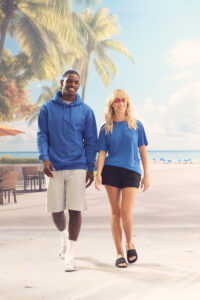
The College Hoodie features a soft ringspun cotton face and midweight fleece construction and a print-ready surface ideal for customization and rebranding. Photo courtesy of AWDis
“We have continued to drive newness in our five-day sublimation assortment with new silhouettes and design templates for a custom look deliverable in five days,” says Momentec Brands’ Carter. “This will continue to be a leading focus for 2026, and beyond, for uniforms and apparel styles.”
A4’s Waugh agrees, saying customization continues to drive the market. “Sublimation offers complete creativity of design and is capturing a large and growing share of the game business,” he says. “We’ve also seen great growth in our direct-to-film business, which allows for unlimited colors in the decoration that really elevates stock garments. Combine a printed stock garment with DTF decoration, and you get the look of a fully sublimated jersey, for instance, at a lower cost and with faster delivery than using sublimation.”
“From a brand perspective, this also means it’s important to offer a well-structured product range with clear color options and consistent product availability, so teams can confidently design complete apparel systems,” says McKenzie, offering advice to programs. “One of the most important things teams can do is think beyond the game-day uniform. The strongest programs consider the full apparel package, including training, travel, layering and fan apparel.”
The Future of Teamwear, Athleisure and Performance Apparel
Looking ahead, the line between athleticwear, teamwear and everyday lifestyle apparel will continue to disappear, says McKenzie. Winning products will combine performance, comfort and visual versatility at a level that meets and exceeds consumers’ needs and desires throughout the day.
“Some of the most promising growth opportunities continue to be in school programs, grassroots sports, fitness communities and organizations looking for branded, athletic-inspired apparel beyond traditional team use. More broadly, activewear and athleisure continue to expand as customers expect more versatility from what they wear,” McKenzie says.
“Another trend the industry should not ignore is the importance of coordinated, decoration-friendly, lifestyle-oriented athletic apparel,” she adds. “It is no longer about high technical performance alone; it is about offering products that perform, decorate well, and fit naturally into everyday life.”
Along these same lines Owen says she predicts a continued strong move toward more premium, luxe-feel fabrics in athleticwear. “Consumers will increasingly expect performance apparel to deliver both technical function and a more elevated feel,” she says. “TriDri will watch this space and continue to explore more premium product developments in response to this growing trend.”
Jennifer Todd is an award-winning writer who has written for a number of national consumer and trade publications. For more information or to comment on this article, email Jennifer at [email protected].