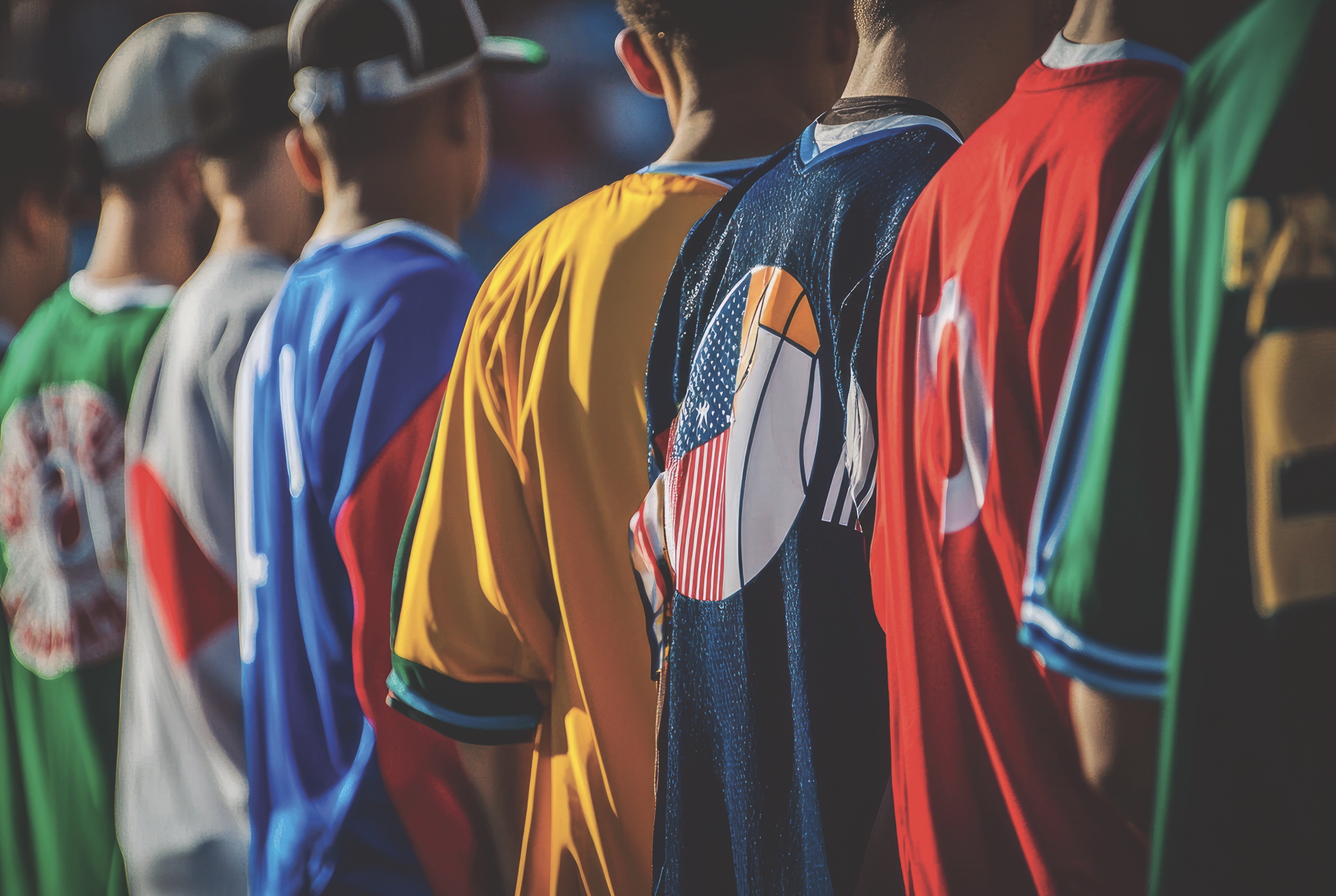
This well-established decorating method offers a fast, versatile and durable solution for producing uniforms and fanwear
Much like the athletes on the fields they decorate for, today’s team apparel decorators face a host of fast-paced challenges, not the least of which is the “Amazon mentality”—wanting orders as soon as they’re placed. Teams expect player jerseys fast, including that last-minute roster addition. Fans want their apparel almost as soon as they click “buy.” With these kinds of rising expectations, keeping up can be a real challenge for decorators.
Fortunately, heat pressing offers a fast, versatile and durable solution for producing both team uniforms and fanwear. Better still, with the right heat press features and accessories, decorators can not only increase productivity, but profits as well.
The Case for Heat Printing Sports Apparel
For team decorators, heat printing offers a practical and efficient way of producing professional-quality uniforms and fanwear without the complexity of other decoration methods. It delivers durability, personalization, speed and an adaptability that other methods simply can’t match.
Heat-applied names, numbers and emblems have long been the standard in athletics, specifically because they’re designed to withstand the demands of sports. From repeated washings to sweat, sliding and tackling, abrasion-resistant heat transfers deliver excellent durability when applied correctly, making them ideal for jerseys and performance apparel.

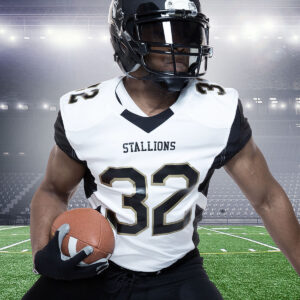
Heat pressing has long provided a versatile solution for producing both team uniforms and fanwear. Photo courtesy of STAHLS’
In addition, team orders rarely consist of identical pieces. Each jersey typically requires a unique name and number. Rosters can change over the course of the season as well. Heat printing makes this kind of personalization easy, with options like pre-cut letters and numbers, pre-spaced name sets or even full custom transfers for each player. Because there’s no need for screens or lengthy setup, decorators can quickly produce individual player details, handle short runs, fulfill last-minute additions and provide replacement jerseys—all while maintaining professional-quality results.
Heat printing also allows decorators to stay agile as new decoration technologies emerge. From dimensional emblems to specialty finishes and full-color graphics, a high-quality heat press provides team decorators with the flexibility they need to adopt any new product developments they come across.
By keeping pace with the latest heating-printing trends, decorators will ensure they remain in a position to run their operations with the greatest possible efficiency. Flexibility in decoration is only part of the equation, maximizing productivity is just as important. The right tools and equipment will invariably help you do more with less.
Labor shortages, for example, are impacting industries everywhere, and apparel decorators are no exception. How can you grow your business if you can’t find the labor? The answer: make the most of what you’ve got.
Employees may come and go, but the right equipment investment supports your business year after year. The features, functionality and design of your heat press will directly impact productivity, consistency and output. From simple accessory upgrades to new machines, here’s what to look for to increase output without increasing labor.
Lower Platen Covers and Threadability
When heat-press decorating, especially at high volumes, the need for speed is greater than ever. With this in mind a major productivity-boosting feature is threadability in the lower platen, i.e., the ability to slide a garment over the platen as opposed to simply laying it on top; a feature that allows you to isolate a single layer of fabric at the same time it makes it possible to avoid pressing seams, collars and other unwanted areas.
The threadability of a heat press’s lower platen can make all the difference in the world in terms of production efficiency. Photo courtesy of STAHLS’
Better still, when combined with a slipcover, threadability allows you to quickly print the front of a garment, rotate it, and then print the back without ever having to remove it from the platen. This can be especially important in the team sports market, where you’re often printing both the front and back of a jersey. The resulting smoother workflows reduce handling time and increase output, with some studies showing threadability, combined with a slipcover, improving productivity by up to 40 percent.
With this in mind, when working to meet the demands of sports teams, consider investing in a machine with built-in threadability or adding a heat press caddie or stand that elevates the lower platen of the system you’re currently working with to create a threadable workspace— upgrades that will improve garment loading, reduce handling time and help increase your shop’s overall production efficiency.
Easier Heat Transfer Design Placement
Decorating team apparel likely means you’re applying lots of names and numbers, design features with little, if any, margin of error, as crooked or off-center prints can easily ruin an otherwise great-looking hoodie or jersey.
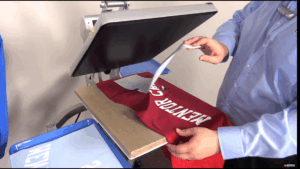
Easy-to-use layout or placement tools are critical to printing individualized names and numbers. Photo courtesy of STAHLS’
To mitigate this, using a layout or placement guide can go a long way to helping reduce misprints and improve consistency, with different types of guides serving different purposes, depending on the application. For example, when applying individually cut letters or numbers without a carrier, a layout board with masking tape can be used to align the characters and hold them in place before transferring them to the garment. Other types of guides include those designed to be placed directly on the garment once it’s loaded onto the platen to help you accurately position each transfer before pressing.
That said, while these kinds of guides can work well as a kind of stop gap, employing them press after press can become time-consuming when processing larger orders, in which case, it may be worth investing in a heat press with built-in alignment tools, like design projection, in which a grid or the actual design can be project directly on the garment being decorated—a technology that can be a true game changer for your business, improving accuracy, increasing productivity and opening the door to new opportunities through faster, more consistent output.
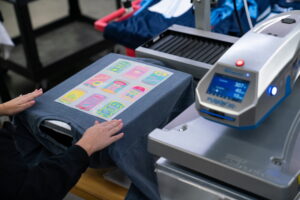
Double-platen presses are another great way of increasing efficiency in this age of labor shortages. Photo courtesy of STAHLS’
Another way of improving loading times and/or improving transfer placements is by adding an additional heat press or investing in a dual platen machine. Rather than hiring an additional heat press operator, simply place a pair of heat presses side by side, thereby making it possible for a single operator to prepare the garment on one machine at the same time another is being pressed. The best presses for this setup will include an auto-open function that releases automatically when the timer runs out, preventing garments from scorching while the operator is working on the second press.
Dual-platen machines work similarly, but with a single upper platen moving back and forth between a pair of heat printing stations. The result is a setup that allows the operator to load and prepare the garment on one station while the other is being pressed, creating a more efficient workflow and significantly increasing production output.
Add-On Sales, The Power of Upselling
Something else to keep in mind when working with sports teams and their fans: you don’t necessarily need to find a whole new set of customers to increase profits. Just the opposite: one of the most effective ways of increasing revenue is by upselling to the customers you already have by offering a variety of products as add-on sales and/or by increasing the value of the apparel you are already providing them with.
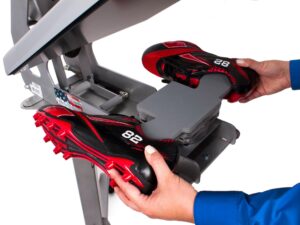
Custom decorated shoes are an especially hot item with sports teams these days. Photo courtesy of STAHLS’
For example, one of the most sought-after items in the sports space right now is customized shoes. This in turn represents a great opportunity for add-on sales. Better still, if you already have a heat press that works with interchangeable platens, all you need is a shoe decoration platen to start providing custom branding on cleats, field shoes, sneakers, etc.
Another way of using interchangeable platens is by offering additional print placements on the apparel you’re already decorating. Use a sleeve platen, for example, to add prints to a sleeve or cuff to elevate the look, or use inside tag prints on your fan attire to promote your custom apparel business.
Yet another great opportunity for add-on sales is hats. These can be sold to teams and fans alike. Use headwear as an opportunity to offer a premium add-on product where you can go beyond a basic embroidered logo or team name.
Teamwear Fashion: Staying on Trend
Whether you’re a team dealer or an all-purpose apparel decorator, one thing remains clear: staying on trend and offering your customers what they want, often inspired by what they see in retail, is one of the best ways to stay relevant.
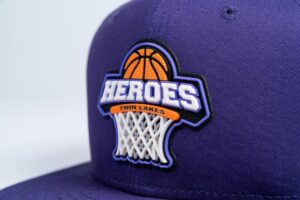
Dimensional patches, like this STAHLS Liquid3D heat press patch are all the rage these days. Photo courtesy of STAHLS’
During the 2026 Winter Olympics, for example, we saw multiple brands embracing a variety of new decoration technologies, including dimensional prints and emblems, metallic emblems, high-dimension PVC patches and full-color tactile designs—technologies that require heating elements in both the top and bottom platens to achieve proper adhesion without scorching. With this in mind, investing in a heat press with a built-in heated lower platen or the ability to add these kinds of platens, may be a worthwhile upgrade for those businesses looking to expand into premium decoration.
Another trend providing a strong return on investment these days is oversized, billboard-style prints of the kind that are most often placed on the back of a garment, reaching shoulder to shoulder. To accommodate this look, team decorators may want invest in one or more heat presses with larger platens to maximize the surface area available for pressing these kinds of designs–a move that will make it easier to accommodate oversized graphics in general as well further improving your shop’s production efficiency.
Dalaney Bradley is a veteran content marketing specialist with long-time custom transfer supplier STAHLS’ TXP Transfer Express (transferexpress.com) and heat-press manufacturer STAHLS’ Hotronix (hotronix.com).