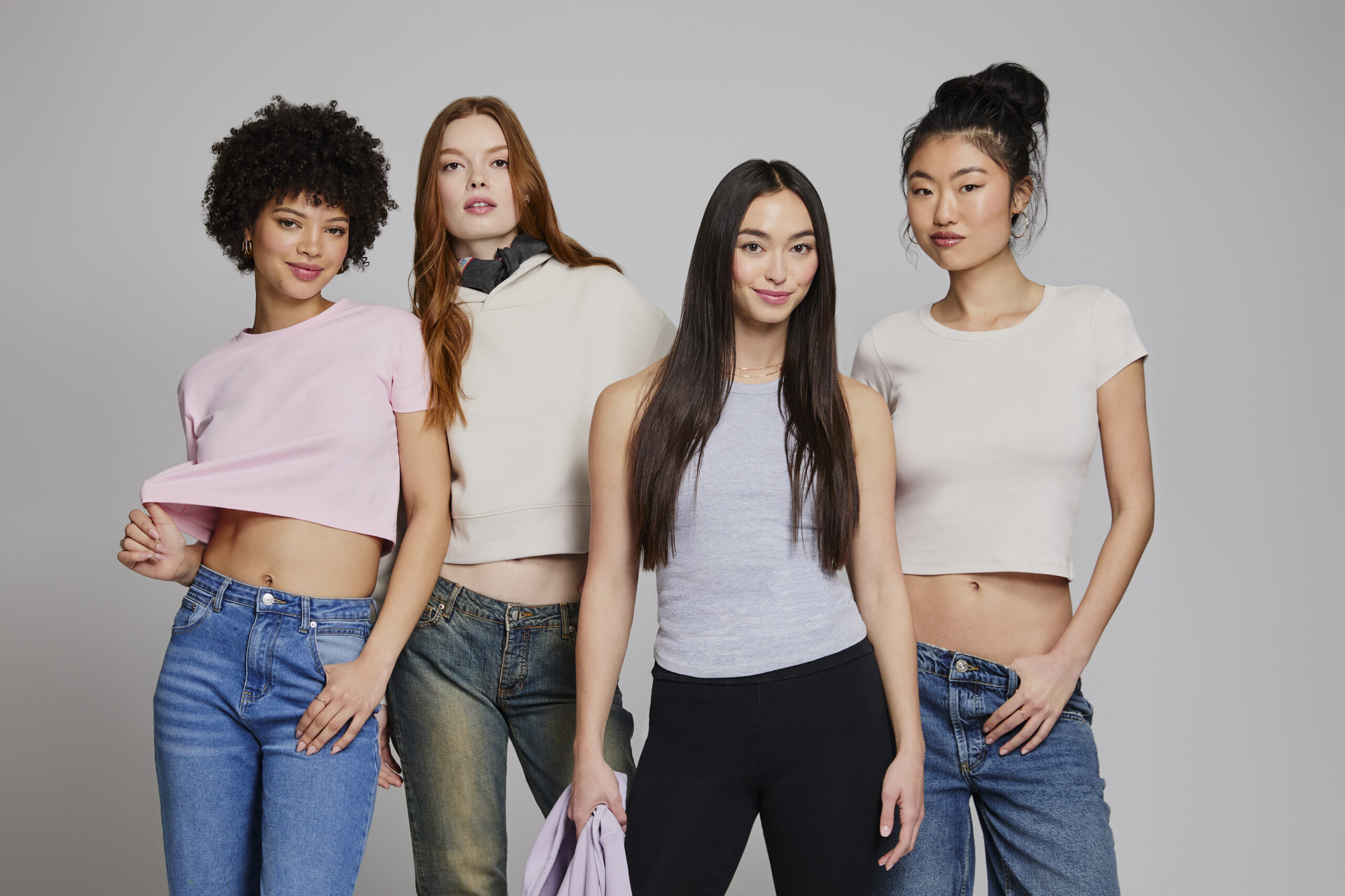
Women’s apparel trends in 2026 are defined by intentional balance, combining premium fabrics, modern silhouettes and retail-inspired styling with decoration techniques that help apparel decorators create fashion-forward collections. From heavyweight blank apparel and faded color palettes to oversized graphics and refined fits, today’s women’s market demands garments that deliver comfort, quality and customization in equal measure.
Among the standard expectations of sustainable practices, functionality and durability is the demand that the blank simply do more. While the decoration typically relays the message, the garment is what people live in. It must feel strong and solid.
“The blank has to feel elevated on its own, even before decoration,” says Michael Niemann, vice president of product at Next Level Apparel, adding: “Our 9087 heavyweight fleece is basically that elevated, premium blank that plays nice with everything, whether you’re keeping it minimal or going bold. It doesn’t fight the design; it just lets it shine.”
Women’s Apparel Color Trends for 2026
Color palettes these days are intentionally balanced as well. Neutrals, washed tones and versatile shades that work across seasons are leading the charge at the same time colors that carry longevity and defy trend dependency are in demand by decorators. Today’s neutral palette features light earth tones (beiges, tans, oatmeal shades), barely-there nudes, and soft pastels (dusty pinks and muted blues). Washed and heathered shades work well with this relaxed array of colors.

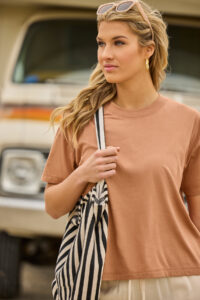
The Live & Tell Unisex Boxy Crew Neck Fine Jersey T-Shirt (Style 3520) features a relaxed fit, drop-shoulder construction and premium combed ringspun cotton, delivering a modern silhouette designed for both comfort and style. Photo courtesy of L.A.T.
“Current orders are being driven by a split palette of bold statements and soft neutrals,” explains Tami Miller, director of creative marketing at LAT Apparel. “On one side, saturated colors like cherry red, cobalt and teal, and vibrant greens are trending as standout accents. On the other hand, warm, elevated neutrals, such as butter cream, soft whites, and chocolate brown, are dominating core pieces.”
Simply put, the “faded franchise” is going strong, as tones that are washed with a slightly worn look present a lived-in feel from the start, a color trend landing well in the womenswear category.
“We’re seeing a shift toward softer, more wearable color, and a big part of that is the continued growth of our faded franchise,” agrees Aimee McFarlane, womenswear designer, AS Colour. “Faded blacks and grays, warm browns and muted bone tones are leading the way, alongside washed blues, dusty pinks and softened greens. Because of that, we’re continuing to build out the faded palette.”
McFarlane adds that faded franchise colors are highly suitable for decoration, since they soften prints, suit tonal graphics, and make even simple designs feel a bit more considered.
Finally, according to Jean-François Bergeron, director of brand marketing at Gildan, color is doing “more of the storytelling than ever,” as part of a strong shift toward emotionally driven palettes he expected to continue on into 2027, says .
“Palettes will balance grounding neutrals, soft pastels, restorative greens and more expressive brights,” Bergeron says. “We’re seeing that play out in real time. Our newest introductions, Rose Quartz and Dusk, are designed to work across tees, fleece and accessories, enabling more cohesive, head-to-toe color stories.”
Decoration Trends and Graphic Placement for Women’s Apparel
In terms of branding and decoration, we are also seeing placement become more flexible and intentional. While a centered chest still has its place, a shift toward bigger, bolder and more unexpected layouts reflects a move toward garments that feel more like retail products than traditional merchandise.
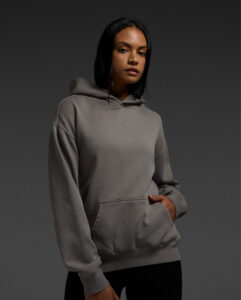
AS Colour’s Women’s Relax Faded Hood blends a garment-dyed vintage aesthetic with a relaxed fit and premium fleece construction, reflecting the continued demand for elevated casualwear and decorator-ready basics. Photo courtesy of AS Colour
“Placement is becoming a bit more strategic and fashion-driven, particularly as promotional apparel becomes more popular across different verticals in ways we haven’t seen as much in prior decades,” says Next Level’s Niemann. “While center chest branding is, of course, still a staple, we’re seeing more experimentation with oversized graphics, off-center hits, and sleeve detailing, especially in womenswear, where silhouette and proportion play a bigger role. Cropped lengths, longer sleeves, and tailored fits are influencing where and how decoration is incorporated.”
Along these same lines, a strong demand for more intentional silhouettes, such as cropped, boxy, mid-length, and relaxed fits, reflects how women wear apparel today, says Bergeron.
“Our approach has been to extend the Comfort Colors DNA, authentic fabric, color and lived-in feel into these more modern silhouettes,” he adds. “The goal isn’t to add complexity, but to make it easier for decorators to build assortments that feel current and wearable. Curated accessories are also becoming a meaningful part of decorated programs, especially with women and lifestyle-driven audiences. We’re seeing strong traction with tote bags, caps, and crossbody styles. A well-designed tote, in the right color, often becomes one of the most used pieces in a program.”
As for the decoration techniques being used, today’s technology is continuing to expand both what can be produced and how quickly it can get to market.
“Advancements like DTF (direct-to-film) and improved digital printing allow for high detail,” says LAT Apparel’ Miller. “Full-color designs are on demand with minimal setup, making short runs and customization much more accessible.’
Isaac Curry, customer experience manager, AS Colour, agrees, addig: “DTF is definitely the fastest-growing decorating option at the moment. The main reason is it allows for highly detailed and vibrant results without the high setup costs of traditional methods. However, embroidery is seeing a big resurgence in womenswear. It adds a tactile, ‘retail ready’ feel that works perfectly with our heavier weight blanks.”
Heavyweight Fabrics and Women’s Apparel Fit Trends
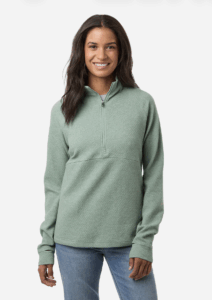
Comfort meets performance in the North End Spirit Textured Quarter-Zip Pullover, featuring a sleek silhouette designed for work, travel and everyday wear. Photo courtesy of S&S
Moving on to fabrics and fit, while trending toward boxy, silhouettes still are sitting in that relaxed space, with boxy and oversized fits remaining strong. That said, the proportions are trending more refined, with the inclusion of slightly cropped lengths and balanced widths.
“Popular silhouettes continue to lean cropped, but with an important distinction based on end use,” says Catherine Tremblay, director of product line management, S&S Activewear, noting, “Corporate outfitting and uniforming must take a different approach.”
In the latter case, Tremblay says, instead of a dramatic crop, the trend is to go with what you might call a “corporate crop” or “meet-and-greet” length, or one that hits right at the top of the pants without exposing skin—an approach that allows brands to stay current with silhouette trends while maintaining a polished, professional look that’s appropriate for a variety of workplace settings.
In addition, according to Next Level’s Niemann, “There’s a clear move toward heavier-weight fabrics that feel premium and hold structure, such as Next Level Apparel’s 7610 Women’s Heavyweight Boxy T-Shirt…At the same time, cotton/poly blends are still a go-to, because they’re comfy, they hold up well, and they print really nicely. The difference, now, is that people also expect them to check the sustainability box. They want to know where everything’s coming from and how it’s made, without giving up on performance.”
Why Quality and Sustainability Matter in Women’s Blank Apparel
As has been the case for a while now, consumers are also continuing to prioritize quality over price. Granted, price is always a conversation. However, today’s market understands that an inexpensive blank is expensive in the long run. If the garment shrinks or loses shape, the value is lost. Consumers are looking for a unique point of difference in the fit and feel of the garment. Ultimately, this serves as the foundation for a brand’s uniqueness. And being unique is everything in the current climate.
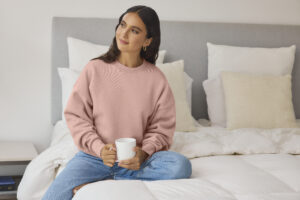
Whether you’re out and about or curled up on the couch, the Women’s Heavyweight Sweatshirt keeps you cozy, comfortable and effortlessly stylish. Photo courtesy of Next Level
“Quality has definitely moved ahead of price as the main driver in womenswear, especially for decorators who are building retail-ready finished goods,” says Millissa Gibson, director of sales, Lane Seven Apparel. “Consumers are used to a higher standard now, and they notice when a blank doesn’t feel premium before decoration even happens.”
Along these same lines, Niemann, of Next Level, says, “Quality is the focus right now, but it’s really about getting that balance with value. People want blanks that make their brand feel more elevated, something that looks and feels premium and holds up over time, so it’s worth the price. And, instead of the blank itself being super flashy, the ‘uniqueness’ comes from how well it supports whatever design you put on it.”
Similarly, sustainability continues to matter as it applies to everything from materials to the entire production process. As evidence, Bergeron points to his company’s dyeing processes.
“Our Pigment Pure dye process uses significantly less water and less energy,” he says. “It reduces processing time, when compared to traditional dyeing methods, while still delivering the color depth and character Comfort Colors is known for. We’re also seeing growing interest in more nature-inspired and mineralized color stories, which align closely with how garment dye naturally expresses color.”
Interestingly, today’s consumer expectation in womenswear is increasingly for sustainability across all price points as well.
“As customers become more educated and decision-makers shift demographically, there’s a growing expectation that sustainable options should be built into the assortment, not just limited to a small number of styles,” says Tremblay. “The customer wants sustainability in premium products, but also expects accessible, budget-friendly options with a strong sustainability story.”
How Apparel Decorators Can Capitalize on Women’s Fashion Trends
While it may seem that reaching the market is easier than ever, challenges still arise when it comes to rising above the noise and emerging as a trusted source.
“Maintaining regular communications with your customers through digital channels, like email and social media, and our team being present at trade shows like the Impressions Expo, is helpful,” says Shanne Pritchard, social responsibility lead at AS Colour. “We love spotlighting our amazing customers to help highlight products and categories in our range, while showcasing their team, talents and services.”
“We are constantly analyzing market and social media trends, while validating what applies to the channel,” agrees Tremblay. “At S&S Activewear, fast fashion, new technology, and fabric innovation drive our seasonal ideation and curation of newness within the portfolio.”
Looking ahead, Tremblay says, “The next big shift in women’s decorated apparel will evolve toward more intentional, inclusive design, with a focus on women as a core and distinct demographic. This includes more thoughtful elements, such as feminine necklines, better-fitting silhouettes, and styles that are functional for real end uses. Fabric innovation and technical elements continue to contribute to newness, as well.”
As for Gildan’s Bergeron, in terms of what’s next in womenswear, he says the drivers are in the details. “The next phase for the category is less about adding more product and more about building complete, retail-ready assortments, where color, silhouette, and use case all work together. That’s where we’re focused,” he says.
Jennifer Todd is an award-winning writer who has written for a number of national consumer and trade publications. For more information or to comment on this article, email Jennifer at [email protected].