
Fleece trends for 2026 are building on the category’s evolution from seasonal cold-weather apparel into a year-round lifestyle staple, with heavyweight fabrics, oversized silhouettes and fashion-driven styles gaining even more traction. Transitional fleece pieces are also expanding the category’s versatility for year-round wear.
“Fleece has evolved beyond purely casual apparel and is now firmly positioned as an everyday lifestyle product, whether that’s for relaxed office environments, travel, fitness or everyday errands,” said Grace Owen, brand manager with TriDri.
“Fleece has evolved from basic athleticwear into a true lifestyle category. Social media, athleisure culture, hybrid work environments and travel-friendly wardrobes continue to fuel growth. Our new custom garment dye program is also trending strongly,” agreed Glenn Brumer, sales director at Royal Apparel.
Michael Niemann, VP of product at Next Level Apparel, sees the shift going a step further, with fleece becoming less seasonal and more foundational. “Historically, fleece was viewed as something people pulled out when the weather cooled down, but today it has become a year-round lifestyle category,” Niemann said. “The way consumers dress has shifted toward versatile pieces that can move between work, travel, fitness, and everyday life, and fleece fits naturally into that space.”

Jason Buchanan, vice president of sales and marketing for Cotton Heritage, has seen a similar shift across markets ranging from corporate and teamwear to hospitality. “Fleece is now an acceptable, and desired, everyday option,” Buchanan said. “It’s no longer just something you wear on the weekend or only think about when the weather turns cold.” With different fabric weights suited to different seasons, he added, fleece has become a year-round sales opportunity.
Similarly, Kristen Vincent, senior design and merchandising manager with JERZEES, termed this year’s fleece trends as elevated basics.
“This is the magic word for the B2B uniform market,” agreed Owen. “An ‘elevated’ fleece means it features clean lines, minimal external branding, and sophisticated hardware like color match drawcord finishes that make it sharp enough for a modern hybrid office or a premium retail shelf.”
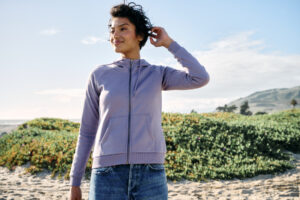
Allmade’s Women’s Organic CVC Fleece Full-Zip Hoodie pairs a modern fit with lightweight, cozy comfort. Photo courtesy of Allmade
“It’s all about cozy, elevated, and sustainable. People are ditching fast-fashion for premium, heavyweight fleece in rich, earthy tones and relaxed, oversized fits,” Mel Lay, co-founder and marketing director with AllMade Apparel, emphasized. “Buyers are asking for durability and longevity. They want fleece that holds its shape, resists pilling, and serves as a premium canvas for high-end decoration.”
According to Grace, other buzzwords for the season include “oversized” (think drop shoulders) as well as “cropped,” to which Milissa Gibson, director of sales with Lane Seven Apparel, added “softness,” “heavyweight,” and “no draw cords” to the list.
Additional trends to watch out for include a variety of weights, vintage washed fleece, open-leg relaxed sweatpants, quarter-zips, year-round layering, garment dye, pigment dye, customized colors, and monochromatic sets. “We’re also seeing strong interest in terms like ‘lounge-to-street,’ ‘quiet luxury,’ and ‘heritage athleticwear,’” said Brumer.
What’s Driving Fleece Trends in 2026?
While a broad range of customers shape growth, the primary drivers of stylistic trends in fleece tend to come from the younger generations, particularly because they gravitate toward comfort, versatility and relaxed silhouettes. “The biggest driver right now is the blurring line between workwear, streetwear, and loungewear,” said Lay.
At the same time, as Brumer pointed out, the industry is also seeing strong demand from corporate brands, music merch, universities, retail brands, and even hospitality programs seeking fleece with a retail look and feel.
“Corporate buyers are also driving growth because they are finally realizing that if they want their employees to actually wear company swag, it has to be retail-quality with a subtle graphic,” Brumer said.
Despite young people leading the charge, retro and throwback looks remain firmly entrenched as well, because of the way they evoke nostalgia and comfort. “Retro styles endure because they provide a sense of comfort and authenticity, allowing consumers to navigate modern uncertainty by connecting with ‘trustworthy,’ familiar aesthetics,” said Vincent.
That said, Tami Miller, Live & Tell (LAT), Rabbit Skins, creative marketing director, emphasized one of the reasons retro endures is because it is constantly reinventing itself. “In fleecewear specifically, vintage washes, relaxed silhouettes, and lived-in textures keep the aesthetic relevant while aligning with today’s demand for comfort and effortless, everyday style.”
Owen added that fleece draws from streetwear aesthetics, which is consistent with the fact that many apparel trends, regardless of category, are influenced by cultural movements. She added that the post-pandemic lifestyle has played a major role in shaping fleece, particularly as the line between work and home life has been blurred.
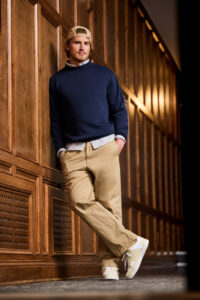
Live & Tell by L.A.T. Apparel gives the 6925 Fleece Sweatshirt classic crewneck an elevated treatment offering a smooth surface and soft hand, with solid colors. Photo courtesy of LAT
Earth Tones and Muted Neutrals Lead Fleece Colors
While neutrals and earth tones like whites, browns, olives and grays still dominate, colors primarily represent elevated basics. Miller said that colors favor lifestyle-driven palettes. “Earth tones, muted neutrals, washed blues, soft greens, and warm browns remain popular, alongside vintage-inspired and garment-washed shades that deliver a lived-in aesthetic,” Miller said.
“Navy, black and cream are going to be the trending colors this year due to their classic finish. It goes with everything and will be your closet staple,” Lay added.
In addition to a strong demand for vintage-inspired navy, Brumer said that the market will also see charcoal, faded greys, and soft pigment and garment washes. “Monochromatic color stories remain very important.”
Along these same lines, Gibson said, “You are seeing a mix of a muted neutral palette; browns and natural colors are still trending very hard, but you’ll have pops of vibrancy with reds and matcha green, plums, and earthy tones with the brighter colors are in there as well.”
Oversized and Boxy Fits Reshape Fleece Silhouettes
I, the area of cut and design, boxy, oversized and relaxed silhouettes are still leading the way.
“The tight, restrictive hoodies of the 2010s are out. Today’s silhouette is all about a dropped shoulder, a roomier chest, and a slightly shorter or banded hem that sits perfectly at the waist. It’s a very nostalgic, ‘90s-inspired drape that feels incredibly modern,” said Lay.
Along these same lines, Rob Crowley, senior director-private label basics and industry brands, SanMar said, “We’re seeing a lack of drawcords, facilitating the clean look of a double lined, single-panel hood. The design is entirely driven by the drape, or lack thereof, of the structured material so thick or bulky coverstitch and seam detail is less popular. In some cases, even a traditional kangaroo pocket is omitted for a clean front.” Crowley, added the latter feature is great for creative graphics and designs.
Finally, Vincent noted, “Over the last few years Crewnecks have grown at a faster rate than the Hoodie silhouette, a sentiment echoed by others in the industry. Vincent also pointed to open-bottom pants.
Sustainable Fleece Moves from Bonus to Expectation
Most company representatives agreed that sustainability has evolved into an expectation rather than a “nice to have.” Customers are interested in transparency regarding sourcing materials as well as the products’ environmental impact. Materials like organic blends, recycled cottons and recycled polyesters are gaining in importance.
“Sustainability alone doesn’t sell a T-shirt. The product has to match the vibe. Fleece still has to be incredibly soft, fit perfectly, and print beautifully. Sustainability is the closer; it’s the reason a customer feels good about paying a slight premium and the reason they become brand loyalists,” said Lay.
Fleece Decoration Gets More Dimensional and Premium
With respect to the nuts and bolts of custom decoration, the good news is there are very few problems centered around printability these days.
“Today’s premium fleece fabrics are performing very well with decoration. Smooth-face fleece fabrics allow for cleaner screen printing and more refined embroidery. Heavyweight fleece has become especially popular for elevated embroidery applications because it gives a premium retail appearance. We develop all our fabrications with the decorator in mind,” said Brumer.
Niemann agreed that the fabric surface remains one of the most important considerations for decorators. “The foundation of a good decorating fleece starts with the fabric surface,” he said. “Decorators need a quality, reliable canvas that allows the design to come through clearly while still maintaining the feel of the garment.”
Cotton-heavy faces are particularly valuable, Niemann added, because they provide a smooth decorating surface capable of producing clean, crisp prints. Fabric weight can also influence the decorating possibilities, with heavier fleece providing greater structure for larger graphics, embroidery and specialty decoration.
Buchanan pointed to another advantage fleece offers decorators: sheer decorating real estate. “You have large print areas for the artwork, but you also have unique areas like the hood that can be decorated,” he said. Premium three-end fleece with a smooth cotton face further enhances those opportunities by providing a clean, consistent printing surface.
In terms of the type of decoration leading the charge these days, industry experts pointed to a big surge in puff embroidery, applique, and embossed logos. “Decorators are moving away from massive, flat screen prints and leaning into tactile, dimensional branding,” said Lay.
Granted, traditional decoration techniques still abound, however, what is trending are mixed media techniques, such as combining embroidery with screen printing. “Minimalist tonal branding is also becoming very popular as consumers lean toward more understated luxury aesthetics,” said Brumer.
“Overall, the trend is moving toward decoration that feels less promotional and more lifestyle-driven, with a focus on texture, subtlety, and premium execution,” agreed Miller.
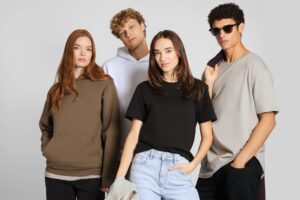
Lane Seven’s Element Collection puts a heavyweight, contemporary spin on fleece basics. Photo courtesy of Lane Seven
Creative Print Placements Expand Fleece Decoration
As for design placements, that, too, is all over the board, but left chest placements remain strong. Other increasingly popular areas include sleeve prints, bottom hem and lower leg placements, hood placements, and back graphics. “It’s really because tech has come so far, so we’re seeing a lot of unusual and different placements and different fabrics than we’ve ever seen before,” Gibson said, adding the only limit with placement these days is the imagination.
Beyond decoration techniques themselves, Niemann believes decorators are increasingly influencing which fleece garments succeed in the first place. “I think decorators have a really good read on what people actually want to wear because they’re the ones seeing what gets picked up, reordered, and used again,” he said. “They’re not just asking, ‘Can we put a logo on this?’ They’re asking, ‘Would someone actually choose to wear this?’”
That feedback is helping push fleece toward better fits, heavier fabrics and softer finishes, while decoration itself becomes more sophisticated through embroidery, tonal treatments and patches.
Lay added minimalism is in many cases controlling the front with the back being where things are getting loud, with extra-large detailing. “It allows the garment to remain versatile and wearable from the front, while still telling a bold brand story on the back,” Lay explained.
“A lot of new fleece products in our space are [also] using 100-percent cotton faces now. This allows for the fabric to be garment-dyed, if desired, but also facilitates multiple decoration types, allowing for crisper, bolder graphics,” Crowley added.
Quarter-Zips, Crewnecks and Washed Fleece Gain Ground
Most manufacturers are pointing to quarter-zips as one of the fastest growing categories out there today. “They bridge that gap between casual and professional perfectly, making them the go-to for corporate gifting and transitional weather,” said Lay.
Miller confirmed that quarter-zips are showing strong growth, as consumers seek “…versatile styles that balance comfort and style.” Along these lines, she pointed to mock necks increasing in popularity due to their polish, layer-friendly appeal, though crewneck sweatshirts remain staples for retail and promotional markets.
“We are also seeing a significant increase in orders for washed treatments. There’s strong momentum in wide-leg/open-bottom sweatpants, oversized drop-shoulder crewnecks, cropped fleece, and full-zip hoodies. Pullovers still remain a major foundation of the category,” added Brumer.
With respect to fabrics, many companies are continuing to experiment with fabric blends, often with an eye toward incorporating sustainable materials. For example, at Allmade, Lay pointed to her company’s Organic French Terry and Recycled Blend fleece, cotton facing fabrics that is soft, allows for easy decoration, and is rooted in sustainable practices.
Along these same lines, TriDri ‘s Luxe Collection, includes a women’s mock neck sweatshirt and a jogger using recycled materials, including a spandex scuba fabric blend.
Heavyweight Fleece vs. Lightweight: There’s Room for Both
Heavier weights tend to dominate the market, but there is a growing demand for mid-weight fleece, as consumers like to wear fleece year-round, and mid- or lightweight fleece when layering. Nonetheless, Brumer said, “Heavyweight fleece still has a huge place in the market, especially for premium streetwear, outdoor-inspired fashion, and elevated basics. Heavyweight fleece gives consumers that luxury comfort and durability they’re looking for.”
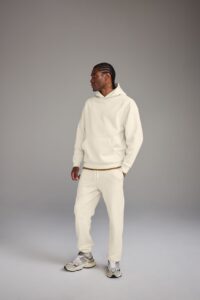
District’s V.I.T. Heavyweight Fleece Hoodie taps into the demand for substantial, relaxed fleece with a 10-ounce, 3-end construction and oversized fit. Photo courtesy of SanMar
“There is a fascinating split happening,” agreed Lay. “Lighter-weight French Terry styles are definitely gaining traction as versatile year-round layering pieces. But heavyweight fleece is absolutely thriving in the streetwear and premium retail space. Heavyweight implies durability, and a specific structural drape that decorators and streetwear brands love. There is a strong place for both.”
Niemann also expects heavyweight fleece to continue gaining ground, fueled in part by streetwear-inspired oversized hoodies and crews becoming everyday wardrobe pieces. “The interesting thing about heavyweight fleece is that it changes how people think about a sweatshirt,” he said. “It has more structure, so it feels more like an actual outfit piece rather than just something you throw on around the house.”
Buchanan is also seeing streetwear push heavyweight fleece further into the mainstream. “There’s a real push toward heavier-weight garments and boxier cuts,” he said, pointing to Cotton Heritage’s M2635 as one of the company’s top-selling fleece styles. “Streetwear continues to influence what customers are looking for, and those heavier weights and more relaxed silhouettes are becoming much more mainstream.”
That added structure also creates opportunities for decorators, he said, ranging from oversized back graphics and embroidery to understated premium treatments.
Another trend with heavyweight is the way it has become seasonless, as it sells well all year, but of course, especially in the colder months. “Heavyweights can range anywhere from 10 oz. to 15 or higher with extreme heavyweight fleeces dominating retail and starting to trickle into the imprintable industry,” said Crowley. Heavyweight, he added, lends itself well to garment dye. “Another interesting trend has been the success of long sleeve hooded tee-shirts. In some ways these may be taking a small chunk out of the lightweight fleece category,” Crowley said.
Performance Features Move into Lifestyle Fleece
Performance features have also become a bigger and bigger part of today’s fleecewear. “Moisture management, stretch, durability, anti-pilling finishes, and breathable constructions are increasingly expected, even in lifestyle products. Consumers want products that feel luxurious but still function for travel, commuting, fitness and everyday wear,” said Brumer.
“Moving forward,” agreed Miller, “we expect brands to continue blending comfort-focused performance with premium fabrics and versatile styling, creating fleece that performs well while maintaining a retail-quality look and feel.”
At the same time, others said performance depends on the fabric. “Performance features in traditional cotton/poly blend fabrics don’t seem to be too requested. This is different for polyester and polyester-rich fleece, I think,” said Crowley.
What’s Next for the Fleece Market?
Looking into their proverbial crystal balls, many experts predicted good things for fleecewear in the coming years. “I believe fleece will continue evolving into a more premium lifestyle category. Consumers will continue demanding better quality, sustainability, versatility, fashion-driven silhouettes, and on-trend colorways. We’ll likely see more innovation around sustainable fibers, garment dye techniques, performance finishes, and premium heavyweight constructions that blur the lines between fashion, activewear, and comfort wear,” said Brumer.
Miller agreed that fleece is on the path toward becoming lifestyle driven. “Consumers will increasingly expect fleece to serve multiple roles—everyday wear, layering, travel, and even casual work settings—driving demand for refined fits, better drape, and more intentional design details,” she said.
Buchanan sees another opportunity in fleece designed specifically for women. “We believe there’s a huge opportunity for a true women’s fleece line, with styles designed specifically for a woman’s body,” he said. Cotton Heritage plans to launch four new women’s styles later this year featuring retail-forward fits and trend-driven colors.
Niemann expects aesthetics to become just as important as performance, particularly through garment dyeing, pigment dyeing and wash treatments that give fleece a worn-in or vintage character. Fit will continue evolving as well. “Oversized, relaxed cuts and drop shoulders are everywhere at retail right now, and that always eventually makes its way into the blank apparel world,” he said. “People just don’t want to wear the same boxy athletic fit that fleece has been for the last thirty years. They want something that feels more current and more relaxed.”
Crowley said that while there is no end in sight yet, he can foresee a time when the market could be saturated with heavyweight fleece, with a possible shift back to lightweight.
Gibson’s prediction is that the fleece market will continue to grow, but it will look differently in five years than it does today. “You’ll see the heavyweight trend settle out and see more innovations in fabric and feel. Softness, the hand feel of the fabric, will become paramount,” Gibson said.
“Right now, retail is telling us that how a garment looks and fits matters just as much as what it’s made of,” Niemann said.
Hilary Daninhirsch is an award-winning freelance writer based in Pittsburgh. Her work has been featured in a number of lifestyle and trade magazines. She can be reached at [email protected] or hilarydaninhirsch.journoportfolio.com.